
Showing posts with label technology. Show all posts
Showing posts with label technology. Show all posts
Tuesday, July 23, 2013
Sunday, July 7, 2013
My Surveillance Problem and Yours


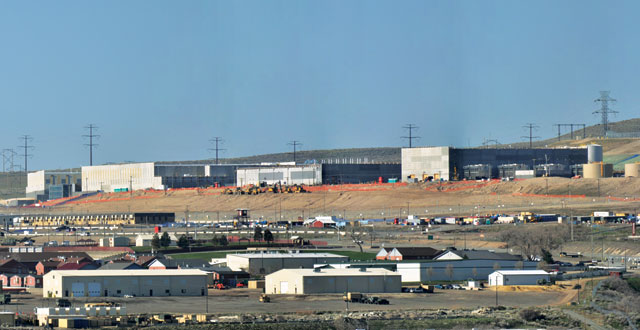 |
| You can always retrieve that lost e-mail: The Utah Data Center, also known as the Intelligence Community Comprehensive National Cybersecurity Initiative Data Center, under construction near Bluffdale, Utah. Photo: Swilsonmc |
BUSINESS AS USUAL
My Surveillance Problem and Yours
By John Zipperer
Bay Area tech companies found themselves in some unfamiliar, muddied waters when it was reported in a British newspaper that a massive U.S. government spy program was collecting daily records on pretty much every user of Verizon. Next came disputed claims that the government had direct access to the central databases of such tech giants as Microsoft, Apple, Facebook, Google, and others.
Edward Snowden, the young CIA contractor who leaked the tech surveillance information, fled to Hong Kong, saying he had faith in its legal system to protect him. He is really saying he has faith in China’s legal system, because ...
Thursday, February 9, 2012
Self-Funding IT Innovation

Smart Enterprise is published (online and in print) for CIOs at large enterprises around the world, so it is fun as a writer (and a reader) to see how businesses and other organizations in different conditions around the globe deal with business technology challenges. In the issue pictured above, I wrote "6 Ways to Self-Fund Innovation."
In the following issue, I have an article on how to know if your business is ready to move to the cloud or to expand its operations there. I'll post it when it's available.
Thursday, January 21, 2010
Google's Nexus One, Redux: More of the Same, and Why That's Good

About nine or ten years ago, I was an editor at Internet World magazine, working in cool metallic modern cubicles in Manhattan, surrounded by a number of great editors and designers who were, frankly, smarter than I was. It was a great place to be to learn more about all of the new technology and online trends that were happening or about to happen. One such trend that caught my attention and was a continuing irritant to me was the announcement every so often of a new device. A PDA to do this. A handheld to do that. A cell phone to do something else.
I thought at the time, I don't want to carry one device for my schedule, one device for calling my friends, another device for getting mapping directions, and another device for playing games. Put them all (and more) on one device, and then it becomes magic. Then I don't have to carry around two or three or four different stupid devices, with the inherent danger of breaking or losing one of them. (Which I would; I'm a klutz. My main impetus for getting contact lenses was that I broke my glasses too easily.)
Lo and behold, Steve Jobs was reading my thoughts -- in an entirely non-remunerative sort of way, alas -- and Apple eventually produced the game-changing iPhone. It's a beautiful product, and it revolutionized the cellphone industry. I didn't get one, because Jobs did something else he likes to do, which is to keep things very close to him, so you couldn't get an iPhone in the United States unless you were an AT&T customer. Since I was already happy with T-Mobile, and I knew the hazards of other cell phone companies, I decided to wait.
Eventually along came the G1 smartphone, which T-Mobile sold. And now we have the Google Nexus One, which T-Mobile can't sell but does serve, and I am one squeeky happy customer. But that's more than you needed to know.
However, not all people need or want the same thing. My webmaster was telling me earlier today about his choices. He moved away from an iPhone this year to a separate phone and PDA. His reason was that he didn't want to have all of his important functions on one device, which, if destroyed or disabled, would render him helpless with his work and private lives. As his colleague, I was impressed with his reasoning, even if I was saddened that I couldn't effectively evangelize for the Nexus One.
I just found it interesting that there are good reasons out there to go in the opposite direction from the one I was requiring of the handheld device industry.
One device, many uses still seems like the way to go. But technology companies would be missing a market opportunity if they were purely lemmings and didn't pay attention to customers with other needs.
(But really, but the Google Nexus One. You'll love it.)
Tuesday, September 8, 2009
Mythbusters Interviewed by Moira Gunn
Last month, the hosts of TV's "Mythbusters" came to The Commonwealth Club of California to talk about their show, how they got into it, why it's interesting, and the joy of blowing things up. They were interviewed by Moira Gunn, host of public radio's "Tech Nation," who did a great job.
So, for all of you tech and science geeks, enjoy.
So, for all of you tech and science geeks, enjoy.
Tuesday, July 29, 2008
Oh, No, I Agree with David Granger!

In an article on the web site of the magazine industry publication Folio:, Esquire Editor David Granger said: "When I talk to groups I sometimes speak about the days I had when I'd get the new issue of Esquire and go through it and think to myself, ‘F--k, it's still a magazine,'" Granger said in a recent interview with FOLIO:. "What I mean is that the medium is so compelling that I and we should all be able to do more with it. The magazine experience is one of the last remaining opportunities to enter a hermetically-sealed world, an edited experience of our culture created by someone else. And, more importantly, it's an experience that encourages you to stay in it rather than constantly bounce in and out of it."
The first part of that reference is why I can't bear to read Esquire these days. It's clear that its editors are just tired of the magazine format. But as a magazine editor (and reader) who still loves the magazine format, I was impressed with the second part of his comments, in which he said, "The magazine experience is one of the last remaining opportunities to enter a hermetically-sealed world, an edited experience of our culture created by someone else."
Exactly. A good magazine isn't a bulletin board or YouTube. It's a presentation of a worldview (sometimes limited to a narrow subject, such as foreign films or knitting, but sometimes literally surveying the world) done by people who want to present it in a certain way, want it to be experienced in a certain way, and who have reasons for it to be done so. The person putting his or her imprint on that "hermetically-sealed world" might be Hugh Hefner, Kerry O'Quinn and Norman Jacobs, Gloria Steinem, or it might be a group of radical cartoonists in New York or a church society in Minnesota. Whatever. It's their world that they want to present in a way that lets them engage readers in a discussion of what they think is important.
It's why I think magazines are challenged today (because the "everyone's a creator" ethos of the internet undercuts it), and why I think magazines are a valuable tool (because, to steal more of Granger's words, "it's an experience that encourages you to stay in it rather than constantly bounce in and out of it").
I noted it in an earlier posting, but I'll reiterate it: Magazines have a bright future, if they can survive the serious and hazardous technological and market changes of today.
Subscribe to:
Posts (Atom)