Wednesday, June 6, 2012

The News, Short and Sweet

I wrote a lot for the current edition of the Marina Times. Here's a media column:
MEDIA
The News, Short and Sweet: One in depth, one in brief
By John Zipperer
Opinion articles about the media are often critical, pointing out everything that is wrong with all or certain media outlets. Here is a corrective. 
There are countless professional news and information outlets available via the Internet. Some are good, a few are great, and many are bad or incompetent. Here are two very different websites that take divergent approaches, and each succeeds in increasing the reach of news and ideas. Newser is arguably the best place to ...

All in the Family

My latest politics article from the Marina Times:
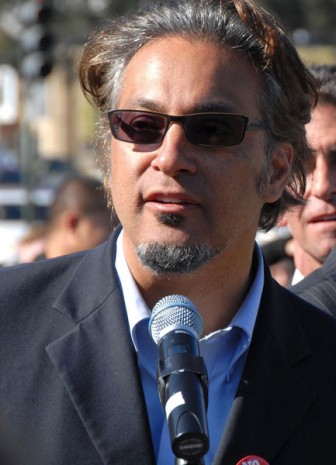
Ross Mirkarimi from happier times
in 2008 (Photo: Brian Kusler)
POLITICS
All in the Family: There Are no Winners in This Fight 
By John Zipperer 
Say the name Ross Mirkarimi, and you are almost guaranteed to get strong and even visceral opinions from just about anyone in San Francisco. Through a combination of his own actions and obstinacy, as well as some heavily socially engineered legislation over the years, San Francisco Sheriff Mirkarimi will continue to be a lightning rod for a long time. In short, he won’t let the story die.

Doyle's Legacy Goes Farther than His Drive

View of Doyle Drive during the April 28
demolition (Photo Courtesy of CalTrans)
My latest article in the Marina Times:
Doyle's Legacy Goes Farther than His Drive 
By John Zipperer 
More than 90,000 people have driven over Doyle Drive daily, yet few are likely to know why the elevated roadway carried that name. There are a number of things in the Bay Area named after Frank Pierce Doyle, but the now-demolished roadway leading to the Golden Gate Bridge was arguably the most apt. Frank Doyle, who passed away on Aug. 5, 1948, was a significant Bay Area figure in the early 20th century, involved in everything from banking to the recovery from the 1906 earthquake. As president of the Exchange Bank,...

Ray Bradbury, 1920-2012


Just this morning on the subway ride to work, I was reading an interview in Filmfax magazine with writer/editor Dr. Samuel J. Sackett. Decades ago, he had sent his first story to author Ray Bradbury to get his opinion on it. Bradbury "rewrote the first two pages into one page to condense it and, of course, it was all in his style which was not my style, so I had to rewrite that page as I would have written it," Sackett told the magazine. "But there was one sentence I simply couldn't rewrite because I couldn't think of another way to put it, so there's one sentence by Bradbury in that story. But I don't remember which sentence."

Upon arriving at work, I learned that Ray Bradbury has passed away at the age of 91. As they say, the death of an old man is no tragedy – meaning, as I take it, it's neither a surprise nor too soon. But that doesn't mean it is not an occasion for sadness and happiness; to lose someone who crafted tales of great poetry is a loss and at the same time a reminder that this weird human species is capable of producing someone who can make a martian pulp story into poetry.

I believe Fahrenheit 451 was the first of his books that I read, probably back in junior high school. (I was just making reference to the wall-sized TV screens in a conversation with a friend last week.) Sometime later, I read his epic book The Martian Chronicles, a book that is inescapable as a lodestar for later writers tackling the topic of former civilizations on Mars, just as one can't write about robots without either referencing or being seen to avoid referencing Isaac Asimov's robotic laws.

Bradbury was an unusual genre writer in many ways. Unlike the hard-SF writers or the new wave SF writers, Bradbury's stories were a gentler, more humane sort. It says something good about the science fiction world that his stories were not only read but celebrated within it. I think they will be celebrated for many years to come, and their influence will be sustained, even if later generations "don't remember which sentence" of the continuing narrative about Mars came from Bradbury. He's woven himself too much into the stories.

Monday, June 4, 2012

Another Century: The Starlog Project, Starlog 200, March 1994


Even though publishing 200 editions of a magazine is a huge achievement, it just doesn’t have the same celebratory sense of accomplishment as publishing the first 100. It’s not rational, really; magazine publishing has always been a risky business, so the longer you can keep going, the bigger the achievement.

Nonetheless, Starlog probably didn’t help itself with this special 100-page issue by basically repeating the formula of issue 100: The core of the magazine is made up of short profiles of the “200 most important people” in science fiction and fantasy. Not a bad idea, but after issue 100, not an original one, either. (It's a formula the magazine would repeat in issue #300.) The 200 referenced in that name actually refers to brief recaps of those first 100 people, then longer (though still short) profiles of VIPs 101-200.

Starlog #200
100 pages (including covers)
Cover price: $6.95

So what happened in the years since the company published Starlog 100? Quite a lot, really. The United States went from having basically three commercial broadcast networks plus public television and a smattering of cable to having four commercial networks plus public, lots of cable (including a science-fiction channel all to itself), burgeoning numbers of independent stations, and an expanding international market. All of that means there was greater demand for content, or, in the words of Hollywood money people, “product.” As a result, Starlog and other SF mags had a lot more genre programs (and movies) to write about.

Starlog itself had changed quite a bit over those 100 issues, though not as much as it had from issue 1 through 100. By March 1994, Starlog was still the core of a multi-title magazine publishing company, but many of those sister titles had changed. The page count of Starlog was higher, the cover price higher, the paper quality better, and many of the names on the masthead different – most significantly, arguably, was the departure from the company of co-founder Kerry O’Quinn, who had sold his share of the business and taken on a consultant's role.

The mid-1980s, when Starlog 100 was published, was a time when people weren’t sure where the economy was going. Things were still on an upswing from the brutal early 1980s recession, and that decade saw constant changes and uncertainty. But by the mid-1990s, when #200 was published, Starlog was in the middle of a solid decade of very low inflation (so no constant cover price increases every year or two) and apparently strong circulation and readership.

The rundown: The cover is a shiny standout that probably caught eyes on the newsstand, so in that sense, it might be a success. But as a well-designed cover, it just doesn’t make it; the Starlog logo is hard to see, the photos at the bottom of the cover aren’t the people listed right above the photos who are interviewed inside; and the background really serves no purpose other than to catch the eye – it’s not as if it’s a science-fictiony design. It’s just shiny. As for the contents page, it’s actually kind of cool: a large Frank Frazetta Barsoom painting sprawls over one full page and edges onto the next.

David McDonnell kicks off the celebratory section with an introduction to the 200 most etc., etc., etc. First we get the brief overviews of the first 100 folks; then begins the many, many pages devoted to the second 100 people, which fills up much of the remainder of the magazine, interspersed with a few normal articles (about which more in a moment).

There are some obvious choices on the 100 new additions to this list, of course, but the real pleasure of going through the profiles is finding people about whom you know nothing; never heard of them. For example, before you read the following name, August W. Derleth, had you ever heard of him? Before re-examining this issue, neither had I. But I was pleased to find that he came from my former home state of Wisconsin and was something of a pioneering editor, publisher, and writer. So I immediately began looking for his work and for information about him online. Philip Wylie, Arch Oboler, and John P. Fulton are other names on the list that might have sparked an interest among other readers. Taken together, this list can help enrich your appreciation of the history and breadth of science fiction and fantasy.

There can be an endless but sometimes fun game played with the list of the genre’s most important people. Who deserved to be on the list but was left off? I would add Starlog’s own former columnist David Gerrold, for one. Or you can go negative and ask who was on the list but shouldn’t be.

Such lists are inherently subjective, of course, but if they’re done well, they can burnish the publication’s authority. One of Starlog’s assets through much of its life was its assumed role as a standard-bearer of establishment SF; it helped define important topics, trends, and people. So, even with my basic skepticism about featuring a big list for a second time in Starlog’s every-100-issues tradition, the editors and writers have acquitted themselves well.

In other content this issue, Kerry O’Quinn uses his From the Bridge column to recount a speech he gave to a Mexican university, where he found a lot of Starlog readers. Stan Nicholls interviews longtime Starlog favorite Arthur C. Clarke, who discusses his latest novel, The Hammer of God, and some of his other works, including the Rama books. Bill Warren profiles filmmaker Joe Dante, who talks at length about the craze for remakes (and big-screen reinventions of old TV shows). And Kim Howard Johnson talks with director Terry Gilliam about films – live action and animated.

Marc Shapiro checks in with producer Gale Anne Hurd about Penal Colony, though she also discusses her work on Aliens and the Terminator series. James Mitchell contributes his first Starlog article, an interview with filmmaker Tim Burton; they discuss Batman, The Nightmare Before Christmas, Cabin Boy, and his upcoming Ed Wood, among other projects. Stan Nicholls talks with writer/editor/science-evangelist Ben Bova. And another first-time contributor, J. Stephen Bolhafner, interviews author William Gibson, who talks all things cyberpunk (including his experiences with and about Billy Idol).
“[L]ife was almost wiped out on our planet many times in the past, most recently 65 million years ago, give or take a week. The current thinking is that a large meteor or comet hit the Earth, causing an ecological catastrophe–the dinosaurs and three-quarters of all other species on land, sea and air were destroyed. Now, there are lots of craters on Mars, including one so big it’s not called a crater, it’s the Plain of helos. It’s 1,000 kilometers across. If something that large hit Mars, it might very well have destroyed any life there by blowing away the atmosphere. Whatever it was sent out a shock wave so powerful that it liquified the rock as it went through. Imagine sitting down to tea when THAT happened!”
–Ben Bova, interviewed by Stan Nicholls: “The Promise of Space”
For more, click on Starlog Internet Archive Project below or visit the Starlog Project's permanent site.

Friday, June 1, 2012

Join Lev Grossman and Me in Palo Alto June 18

If you have read Lev Grossman's The Magicians and its sequel, The Magician King, then there's a pretty good chance you will want to join us on Monday, June 18, at the Cubberley Theatre in Palo Alto, California. Grossman will be appearing there at our Commonwealth Club program, which begins at 7 p.m. I'll be moderating the event, but I'll be just as interested as you are to hear him talk about these books and his other work.

Grossman is Time's book critic and author of – besides the best-selling Magician books – Codex and Warp.

Get details on the event, and reserve your tickets!

If you haven't read those two books but you enjoy fantasy and science fiction, then I suggest in the next few weeks you buy them and read 'em. The Magicians has been described as "Narnia for adults" and "Hogwarts with sex and drugs," both of which sound a bit more sensationalist than the reality. But they are a fresh take on the fantasy/magic genre, and they deserve to go on your bookshelf next to Potter and Jonathan Strange & Mr. Norrell.

In the meantime, follow Grossman's blog. He is an open and entertaining writer, not afraid to be incredibly open and honest in his writings (such as his description of how he totally screwed up an interview with J.K. Rowling years ago).

Then come meet Grossman and say hello to me on June 18.

Wednesday, May 30, 2012

All Is Lost

Well, this is a gobsmacker.

Wisconsin had the absolute worst job record of all 50 states for the past 12 months; but according to a poll of voters in that state, they're supporting Republican Gov. Scott Walker because they think he's the better job creator. He's got a 7-point advantage over Democrat Tom Barrett (up from 6 points a few days ago).

Considering the $30 million in recall campaign funds Gov. Walker has pulled in (especially from well-heeled out-of-state friends), this makes me think as goes Wisconsin, so goes America.

Sunday, May 27, 2012

The Fake Magazines of Blade Runner

Over at The Atlantic, Alexis Madrigal tracks down and displays some of the fake magazines used in Ridley Scott's great film Blade Runner. Worth a look.

Along that same line of thinking, Shortlist.com has a look at some fake covers of real magazines that were used in non-science-fiction films through the years.

And if that amuses you, but you don't have InDesign and Photoshop on your computer, check out this Fake Magazine Cover Creator (they even have Future magazine, how sweet). Such as the bit of fun I had creating my own Fangoria cover (at right).

Fake is fun.

Wednesday, May 23, 2012

The Shatner Revival: The Starlog Project, Starlog 199, February 1994

William Shatner never really went away, of course. Before Star Trek, he had a long and varied career that included Shakespeare and more; after Trek, he acted in other movies (Trek and non-) and even starred in another prime time television show in the 1980s called T.J. Hooker. But in the mid-1990s, Shatner came back in a way that established himself as an immortal, or at least someone who clearly was going to be around a long time.

When he launched his Tekwar books, they were always likely multimedia candidates, and this issue Starlog highlights the Greg Evigan-starring television movies (it had already been translated into comics). Before the Tek wave had gone, it would also spawn a short-lived TV series and a video game.

There are lots of actors and other creative folks who have late-career resurgences; their rediscovery by the general public generally lasts a cycle and then recedes. But Shatner’s is still going strong in 2012, having conquered TV, social media (he’s got more than 1.4 million followers on Google+), dot-com success (Priceline), and yet more books, TV series (winning two Emmys for his Denny Crane portrayal), and videos.

But, as I noted, Shatner never really left. Even during that time that I tend to think of as his wandering through the desert phase – the 1970s – he was busy with stage shows, films, animated television, game shows, and commercials. Yet for all of that, it is fair to consider his Tek success as the birth of Shatner as multimedia entrepreneur, a role that he continues to play with much success today.

Starlog #199
84 pages (including covers)
Cover price: $4.95

This month, Starlog publishes its official statement of ownership, management and circulation. The total paid circulation for the issue closest to the statement's filing deadline is listed as 265,192 (a giant increase over the previous year's 164,886), including the number of paid subscriptions of 9,350 (little changed from 9,675 in the last year). Why did Starlog’s circulation take off like that? Part of it might have been a distribution strategy by the publisher; the total copies printed was a whopping 610,000 (more than twice what it was in previous years), which means there were way more than 330,000 returns unsold from the newsstand. As wasteful as that seems, it was possibly driven by the new newsstand competition Starlog was preparing to face from upstarts Cinescape, Sci Fi Universe, and Sci Fi Channel magazine (later renamed Sci Fi Entertainment), all of which would debut later in 1994. Control of the newsstands was something Starlog Group was experienced in.

Random classified ad under the “Miscellaneous” banner: “HOLLYWOOD WILL BE KILLING OFF STAR TREK – BUT! Hollywood has read our ‘strong support’ petition letter and – Hollywood says yes! This particular letter would definitely ‘force’ them to reconsider – if they are flooded with them! Please sign this letter and mail it back now! Or Star Trek is dead. To receive yours, enclose a S.A.S.E. within an envelope to …” It does make you think Starlog should have raised its classified ad pricing for each additional exclamation point used.

The rundown: This month, the magazine breaks with its usual photographic cover treatments and runs the illustrated image from the Shatner epic Tekwar; meanwhile Nana Visitor in Bajoran garb takes over the contents page. In his Medialog column, David McDonnell reports that “There will be another Star Trek TV spinoff, also following the adventures of a spaceship, one with a smaller crew complement than the Enterprise (and including a Vulcan, a Klingon, and possibly some Next Generation characters.” Which reminds me of the Mystery Science Theater 3000 episode featuring Laserblast, in which Mike saves the SOL by taking on Captain Janeway’s persona (and clothing) and saying at one point, “I’m responsible for the lives of 148 crewmembers aboard this ship, 144 of which we never see.”

Michael McAvennie reviews MechWarrior, Traveller, Magic: The Gathering, and more in his Gamelog column. The Communications letters from readers include a super-long letter defending Star Trek: The Next Generation, among other letters, plus Mike Fisher’s Creature Profile featuring the Mummy. Books reviewed in Booklog include Star Wars: The Truce at Bakura, The Far Kingdoms, Majyk by Accident, Growing Up Weightless, Turning Point, The Longing Ring, The Callahan Touch, ViraVax, When True Night Falls, Harm’s Way, The Chronicles of Pern: First Fall, Down Among the Dead Men, Out of Time, Crashcourse, Shroud of Shadow, The Cygnet and the Firebird, Catfantastic III (yes, a collection of short stories featuring “tales … of magical, mutant and mundane cats" – it’s what people did before LOL cats websites), Into the Green, and The Well-Favored Man: The Tale of the Sorcerer’s Nephew. In Videolog, David Hutchison reports the latest video releases, including Highlander, Robinson Crusoe on Mars, and a Twilight Zone boxed set. And in Fan Network, there’s the usual listing of conventions and directory of Trek fan clubs and publications (including Star Fetch: The Fun Fan Magazine, published in my home state of Wisconsin).

Ian Spelling, Starlog’s go-to guy for Star Trek reporting, interviews Nana Visitor, one of the stars of Star Trek: Deep Space Nine. Her role of a Bajoran officer aboard the space station was originally going to go to Michelle Forbes, who portrayed Ensign Ro on Next Generation, but Forbes reportedly wanted a movie career rather than being tied to a series. So Visitor stepped in. Craig W. Chrissinger talks with Ashley McConnell, a novelizer of Quantum Leap stories. She gives some interesting insight into the how-tos of writing licensed novels, such as negotiating her contract almost by accident, or how much freedom the writer has to write the stories (a lot, in her case). And Bill Warren profiles actor John D’Aquino, who portrays Lt. Ben Krieg on seaQuest DSV. (My favorite pullquote from the issue is in the D’Aquino article: “I was such a boring kid that I would memorize TV Guide.”)

Veteran film scorer John Barry tells writer Tom Soter about his work on James Bond films, The Black Hole, Howard the Duck, and more. Soter writes:
[Barry] remembers 1986’s Howard the Duck with a shudder and a chuckle. “I had just finished Out of Africa with the same company, which wound up a hugely successful movie; it won all the Academy Awards. I got this mad phone call [from the film company, Universal Pictures] and they said, ‘It’s George Lucas’ movie,’ and I thought, ‘Well, a cartoon death wizard, a ridiculous thing, it just might be fantastic.’ So I said, ‘OK,’” Barry scored sequences without seeing the special FX, recalling that “I went blindly, with confidence, and I thought that [Lucas] was going to be taking care of all that. That never worked out. I still don’t know what happened. It was such an unbelievable disaster. And I never met George Lucas.” 
Peter Bloch-Hansen previews the TekWar telefilm. John Vester interviews the seemingly tireless Star Wars novelist Kevin J. Anderson. Joe Nazzaro takes a look at Sylvester McCoy, who recalls his work as Doctor Who. Pat Jankiewicz continues Starlog’s eternal quest to interview every person ever involved with the Trek franchise, this time talking to actor Jan Shutan, who guest starred as Scotty’s girlfriend in “The Lights of Zetar.” Tom Weaver profiles Billy Benedict, co-star of the Adventures of Captain Marvel serials in 1941. In his From the Bridge column, Kerry O’Quinn highlights Mario, a friend who explains his inspirations for pursuing a film career. Mark Phillips interviews Robert Hamner, who discusses his writing credits in Star Trek (original), Voyage to the Bottom of the Sea, and others. And in his Liner Notes, editor David McDonnell lays down the law about what Starlog’s staff can and can not do for you (hint: Don’t send them your fiction stories and don’t ask them to forward a letter to your favorite actor).
“I think, for sure, all the women who came before us made a difference in how our roles were destined. I’ve been in relaionships where you’ve tried to get a man to marry you, but he’s resisting the relationship. You figure he is just not the marrying kind and you leave him. Two months later, you find out he got married to the next woman he met. That seems to be a common pattern. He needed to be comfortable with [marriage], so he could finally do it in a fresh environment. I think, maybe, in a sense, that’s what happened with Star Trek. Marina [Sirtis] and all the other women had an effect on what Terry [Farrell] and I get to do on Deep Space Nine. And I’m very grateful to them.”
–Nana Visitor, actor, interviewed by Ian Spelling, “Major Player” 
For more, click on Starlog Internet Archive Project below or visit the Starlog Project's permanent site.

Monday, May 21, 2012

Drunk Yoda

Drunk Yoda says: "I'm not as drunk as you think I am."


I expect an internet meme out of this, folks ...