Showing posts with label novel. Show all posts

Sunday, May 25, 2014

Gregory Benford & Larry Niven's Bowl of Heaven


An hour ago, I finished reading Bowl of Heaven, a 2013 science-fiction collaboration between Larry Niven and Gregory Benford. I am left feeling refreshed — it has been a very long time since I read a hard-science, deep-space SF novel — and stunned. Stunned because the book reads at times as if it went right from the writers' computers to the printer, without going through an editor. I'm sure that isn't true, but how else to explain mistakes that had me wondering if I had missed a couple pages or was losing my mind?

It started early in the book where one character is injured; a metal shard had been embedded in his leg during an accident. He is tended to by a teammate, who removes the shard and applies medication. A few paragraphs later, however, a different teammate is removing the shard and medicating him.

It continued throughout the book. People who are described as being in a room are suddenly in a different room. An alien who is on the bridge of an airship descends a stairway and goes to ... the bridge. People who left a room are suddenly back in the room. The amount of time that has passed since the launch of the humans' spaceship is stated, but then it's given as a different amount of time later.

On and on.

I have read Benford's books before, but I'm surprised to say that I don't believe I have ever read anything by Niven, which is an admission not to my credit. Niven is a science-fiction legend with numerous big books to his credit. But, for whatever reason, I had never read his work. That was part of what made me select this book to read next after I finished reading a couple history books (Anne Applebaum's post-World War II history book Iron Curtain — a book that was stunning in a good way, though telling a very sad tale — and Robert Graves' historical novel Count Belisarius). This was my chance to read Larry Niven.

I actually enjoyed the grand-premise tale of Bowl of Heaven. The characterizations and relationships are a bit out of date (sorry guys, but having interpersonal relationships be key to the characters and their organization but not even mentioning a gay character — and then in the most oblique way — until the book is nearly finished suggests being a bit out of touch), but I'm willing to overlook that. However, I was astounded at the poor editing. It's old news that even big publishers don't do proper editing any more, but these mistakes (repeated incidences, actions described twice — just a few paragraphs apart — but differently, and more) are incredibly unprofessional. If it was a mind-bending game of fluid reality with the readers, that would be something, but of course the story would make use of that. No, that just was not the case. Bowl of Heaven was a normal hard-science SF novel, and publishers Tor did themselves, their authors, and their readers a major disservice — publishing malpractice, really — by releasing a hardcover book with this many major, obvious errors in it.

The writers should have caught some of this in the various drafts they would have proofed. But writers are often focused on making sure other aspects are correct; that is compounded by working with a collaborator. We'll give Niven and Benford a small slice of the blame, but the majority of the blame cake has to be served up to Tor.

The sequel to what apparently is the first of a series has been published. Called Shipstar, it was published by Tor in April 2014. Think they had an editor do a good line-by-line on this one?

Saturday, August 4, 2012

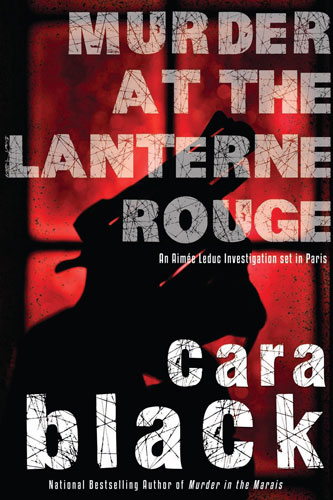
Interview with Author Cara Black

Cara Black; photo by Steven Fromtling
Cara Black, author of the Aimée Léduc series of mystery novels from Soho Crime, is profiled by yours truly in the current edition of the Marina Times:
Cara Black: International woman of mystery novels  
by John Zipperer 
If you walk down Market Street with mystery novelist Cara Black, what else do you talk about but murder? As she chatted about the chilly late July weather, she occasionally flipped her hair away from her eyes, only to have the wind blow it back. But at the mention of a real unsolved murder case here in San Francisco, Black’s eyes widened and she asked for details. She then shared a true story about another unsolved murder here, a locked-room killing in her own neighborhood involving a victim from France.  
France and death are not far from the surface when Black talked with the Marina Times about ...

Tuesday, July 27, 2010

A Daniel Kehlmann Primer (Measuring the World, Ruhm, usw.)

I discovered German/Austrian writer Daniel Kehlmann's books in an interview with him in a German magazine a few years ago. He sounded intelligent, and he was getting a lot of praise. Luckily for me, his book Die Vermessung der Welt had just been translated into English and published as Measuring the World. I read it immediately, and I found the praise for him was justified.

If you don't know the book yet, I strongly recommend it. When I tell people it concerns two towering figures of the Enlightenment – Carl Friedrich Gauss and Alexander von Humboldt – who embark on a global quest to literally measure the world, I realize it sounds either fanciful or dull. Two scientists measuring distances and quantifying the planet? But it's a beautifully, and cleanly, written book that is funny, smart, and never dull.

The only other book so far released in English by the 35-year-old Kehlmann is Me and Kaminski, which is even funnier. It concerns an unbelievably conceited journalist trying to interview a quirky artist. Again, that brief description does this short novel a great disservice.

Basically, if you have a brain and want to read a first-rate talent (not to mention if you want to read someone who's not just regurgitating the same themes and self-absorption of young American novelists), then I suggest you give Kehlmann's books a try.

I am currently reading the German edition of his still-untranslated first novel, Beerholm's Vorstellung. But I am eagerly awaiting the release of the third translated book this September, Fame (original title, Ruhm). In this video below, Kehlmann talks about Ruhm (sorry, it's in German).


What? You don't read or speak German? Sigh. Well, here's a video that looks like it's a commercial for the translated edition of Kehlmann's recent blockbuster Vermessing Der Welt. The video has text in Chinese (I think). You've simply got to know either German or Chinese to get along in this world. You knew that, right?


It is no surprise to me that his books are being translated around the world. His works are huge bestsellers in Germany, and I hope they enjoy similar success elsewhere. First, because he is such a good writer. Second, because he deals with issues that are of critical importance; he actually makes the Western Enlightenment something that people can see and experience. Perhaps that's possible because he was a philosophy and literature student; but having that knowledge means nothing if you can't make the words say what you want, the way you want.

Sunday, January 17, 2010

Robert Löhr's Pre-Steampunk Chess Playing Automaton True Science Fiction Novel


As you can tell from the blog headline, it is difficult to succinctly sum up Robert Löhr's novel The Secrets of the Chess Machine (original title, Der Schachautomat, Piper Verlag, 2005). I purchased this English translation of the German novel about a chess-playing automaton when I found it in the science fiction section of a local bookstore. Set in 1770 and thereabouts, it tells the story of Wolfgang von Kempelen, a Hungarian knight in the world of Austrian Empress Maria Theresa, for whom he builds the titular machine. Kempelen goes on to showcase his creation across and beyond the empire, and he is hailed as a mechanical genius and a darling of the empress.


Unknown to the admirers but suspected by few, the automaton was a fraud. Built in humanoid form and seated at a cabinet with a chess game atop it, the Turk -- so-called because of its turban and the mystery such a connection provided to the Austrians in the age of the Ottomans -- had back doors and front drawers and more that could be opened to give the audience a peek inside, demonstrating that there wasn't a human inside performing the automaton's chess moves. But in fact there was a human inside, a dwarf who was able to remain unseen because of his small size and some false-backed drawer wizardry.

Unknown to me until I was mostly finished reading the book is that it is based on a very true story. Von Kempelen really did construct the machine; he really did have a small person inside playing the chess matches; and he really did wow the public of late 18th-century imperial Europe. (A replica of the original Turk is pictured above; the original was destroyed by fire in 1854.) But, as Löhr writes in the author notes at the end of his book, there is a fair amount of the story that Löhr needed to fictionalize, including the sympathetic dwarf who is both von Kempelen's aid and antagonist, as well as von Kempelen's character, which Löhr admits deviates in the book from the known facts about the inventor and author.

It is fascinating to follow von Kempelen's little charade and to wonder how it would be greeted today. In the novel, he worries about a loss of his status should he be found out, and this provides much of the drama between him and his assistants. But Löhr explains in his own words that the dividing line between science and showmanship was a bit different in those days, and von Kempelen freely tramped across the line with ease. In our own modern times, we also have a complicated relationship with chicanery and spectacle. Technological marvels still earn people millions of dollars and years of fame, but then so do fake spectacles such as professional wrestling and public magicians. (A writer recently noted the difference between the British and Americans when it came to showmen such as David Blaine, who likes to pull public stunts with his illusions. She argued that whereas Americans go all ga-ga over his tricks, the UK public reacted with mocking and hurled fruit when Blaine suspended himself over the Thames in a glass box without food. The difference, she said, was that the British know the difference between performance and self-promotion.)

Is The Secrets of the Chess Machine science fiction? Historical fiction? Both? Neither? In the end, it doesn't matter. If you love science fiction, you will likely enjoy both the mechanical wizardry in the book and the Enlightenment themes. If you like historical fiction, you'll be well-served with the many real actors who appear in this novel. If you just like a good book, then you're in for a treat.

This was Robert Löhr's first book. He has since written two more: Das Erlkönig-Manöver and Das Hamlet-Komplott. Neither, as far as I can tell, has become available yet in English, but I look forward to reading them when they are.